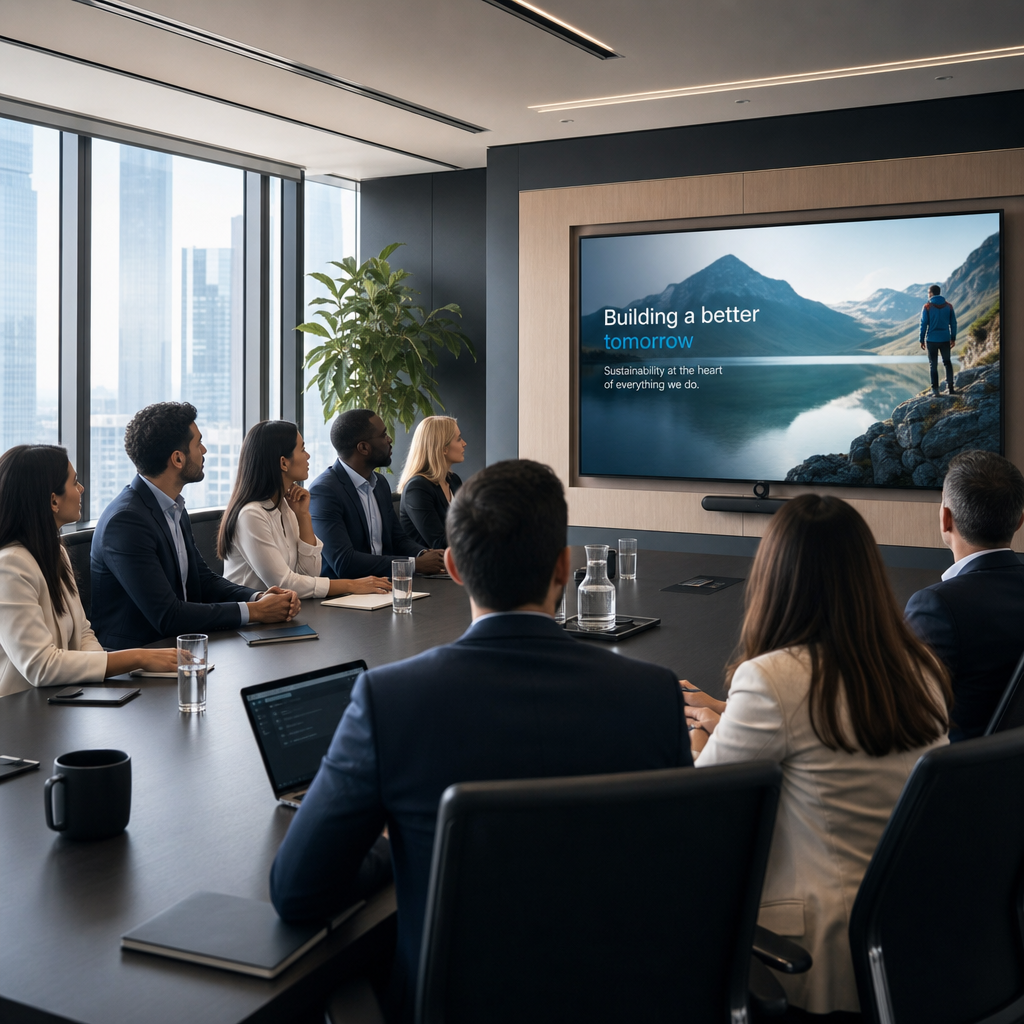

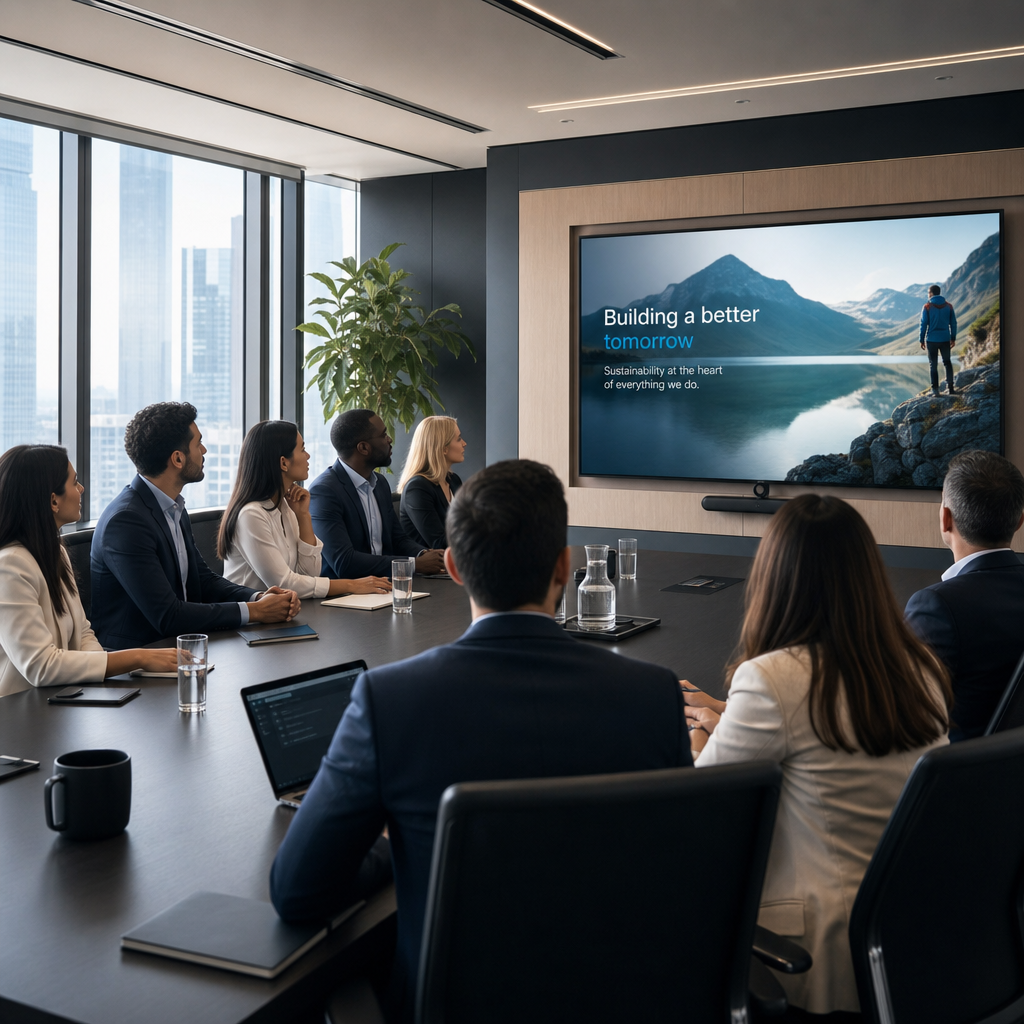
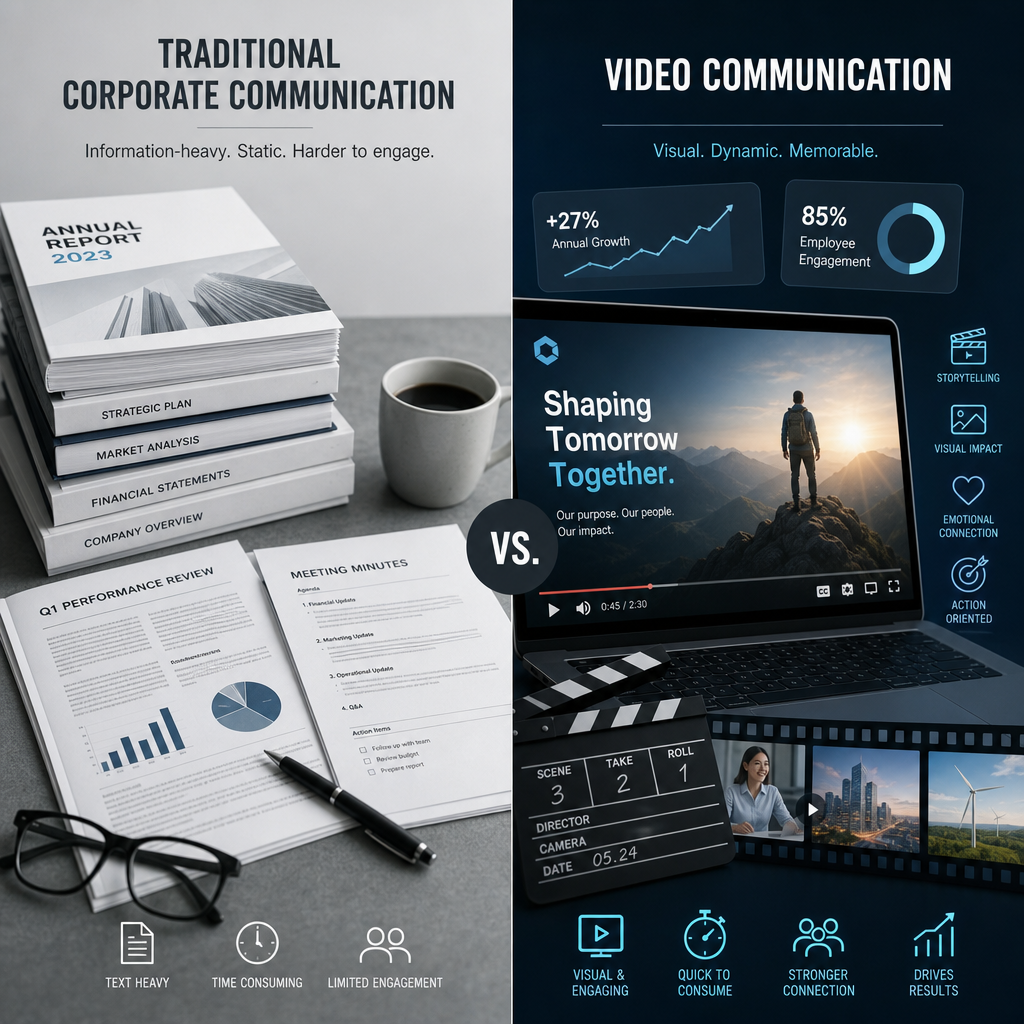
Most Malaysian GLCs and industry associations spend heavily on annual reports, press releases, and corporate dinners, yet completely underinvest in the one format audiences actually remember: brand film. Research from HubSpot consistently shows that viewers retain 95% of a message delivered through film compared to 10% through text. For organizations where public trust directly affects mandate delivery, stakeholder confidence, and member retention, that gap is not a communication preference. It is a strategic liability. This article breaks down how the smartest Malaysian institutions are using brand video content Malaysia to close that gap and what production choices actually move the needle.
Table of Contents
- Quick Takeaways
- Why GLCs and Associations Need Brand Films Now
- What Brand Film Actually Means for Corporate Malaysia
- The Trust Mechanics of Corporate Storytelling
- Production Approaches Compared
- Common Mistakes in Corporate Brand Films
- How to Brief a Corporate Video Production Partner
- Measuring What Your Brand Film Actually Achieves
- Frequently Asked Questions
- References
Quick Takeaways
| Key Insight | Explanation |
|---|---|
| Brand films outperform press releases for trust-building | Audiences assign higher credibility to organizations they can see and hear authentically, not just read about in formal statements. |
| GLCs face a unique storytelling challenge | They must serve both government mandates and public perception simultaneously, which generic corporate videos fail to address. |
| Industry associations benefit most from member-centric narratives | Films that feature real member businesses and industry outcomes outperform generic institutional messaging in retention and engagement. |
| Multi-camera production signals organizational credibility | A single-camera shoot at a flagship event looks amateurish to C-suite audiences. Multi-camera production signals that the organization takes its story seriously. |
| Distribution channels must be planned before production starts | A brand film made for a conference screen performs differently than one cut for LinkedIn or a ministry briefing. Format decisions drive script decisions. |
| Testimonial-led films generate more stakeholder trust than presenter-led films | Third-party voices, especially from partners, beneficiaries, or community leaders, carry more persuasive weight than internal spokespersons. |
| Corporate video production Malaysia costs vary widely based on scope | Day rates, crew size, post-production complexity, and licensing requirements all affect final costs. Brands that skip the brief stage almost always overspend. |
Why GLCs and Associations Need Brand Films Now
Government-linked companies in Malaysia operate in a uniquely exposed position. Their funding sources, governance structures, and social mandates are subject to public scrutiny in ways that private companies are not. The same applies to large industry associations, whose legitimacy depends on members believing the association actually serves them.
A well-produced brand film solves a problem that no annual report page can: it shows, rather than tells. When Khazanah Nasional, PETRONAS, or a sector association like the Malaysian Automotive Association publishes a film that follows a real community program or a real member’s growth story, it creates evidence. Evidence builds trust in a way that statistics alone cannot.
Brand video content Malaysia has matured significantly over the past five years. Audiences, including institutional investors, ministry officials, and media editors, now have high visual literacy. They can tell within seconds whether a film was made thoughtfully or assembled cheaply. The bar for credibility has risen, and organizations that still circulate grainy event recordings as their primary video presence are actively undermining their own positioning.
What Brand Film Actually Means for Corporate Malaysia
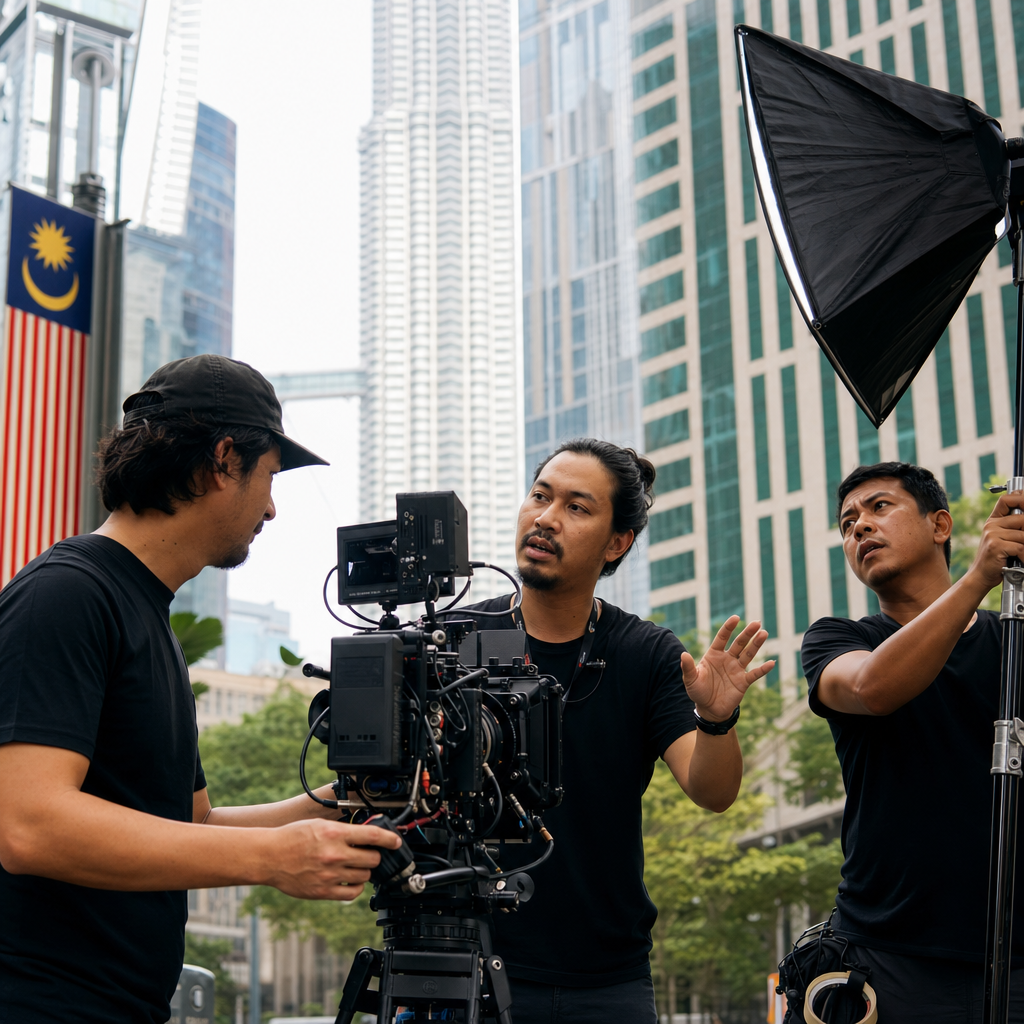
The term gets used loosely, so let us be precise. A brand film is not a product advertisement, a training module, or a recorded keynote. It is a narrative production, typically between 90 seconds and six minutes, that conveys an organization’s identity, values, and impact through structured storytelling. It has a beginning, middle, and end. It features real people or real events. And it is designed to change how an audience feels about the organization.
Corporate Profile Films
These are the most common format for GLCs. They introduce the organization’s history, leadership, and mandate to new stakeholders, government ministries, or international partners. Done well, they replace a 40-slide PowerPoint in less than four minutes. Done poorly, they are a narrated slide deck with stock music.
Impact and CSR Films
For organizations with social mandates, such as Amanah Saham Nasional Berhad or FELDA-linked entities, impact films are the most powerful trust-building format available. They document real outcomes: families moved out of poverty, communities with better infrastructure, entrepreneurs who received funding. These films are most effective when they keep the organization in a supporting role and let beneficiaries carry the story.
Event Coverage Films
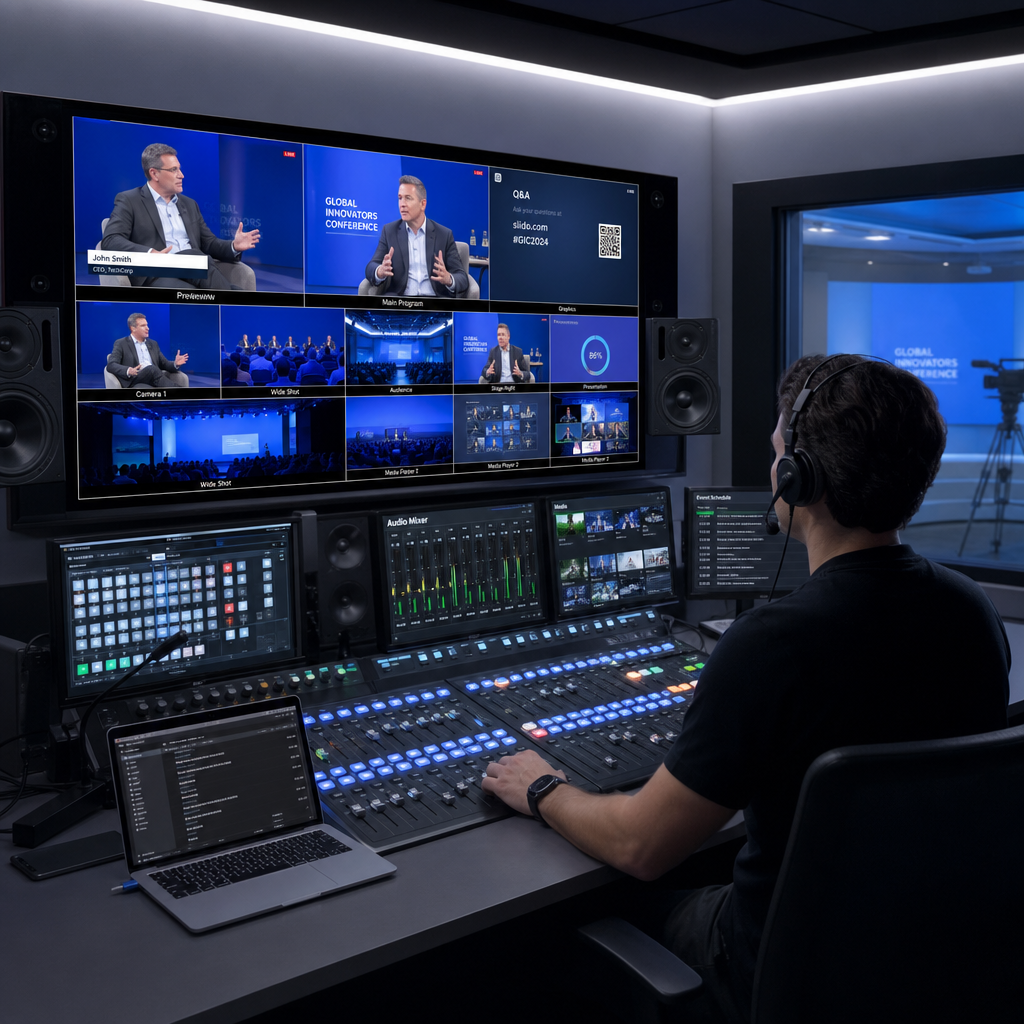
Large annual dinners, AGMs, and industry summits represent a one-time opportunity to capture authentic institutional energy. A well-executed multi-camera event coverage production creates a permanent record that can be repurposed across internal communications, social channels, and future pitch decks. Organizations that rely on a single roving videographer for these moments routinely miss angles that cannot be re-created.
Pro tip: Brief your production partner on the three to five moments from your event that absolutely must be captured, such as the minister’s remarks, the award presentation, or the signing ceremony. This prevents the crew from spending too much coverage time on ambient cutaways when the critical content is happening elsewhere.
The Trust Mechanics of Corporate Storytelling
Trust is not built through assertion. No organization has ever become trusted because it called itself trustworthy. Trust is built through consistency, transparency, and demonstrated competence. A brand film, when well made, delivers all three simultaneously.
“Authenticity is the daily practice of letting go of who we think we should be and embracing who we are.” Brene Brown, research professor and author of “Dare to Lead”, whose work on organizational vulnerability has been widely cited in corporate communications strategy.
Consistency in brand film means your visual language, tone, and narrative voice match across all productions. If your GLC produces a formal corporate profile film and then an upbeat social media campaign that looks like a different company, you have created cognitive dissonance rather than trust. The solution is a brand film style guide that governs color grading, music style, interview framing, and narration tone before any camera rolls.
Transparency in corporate storytelling means showing what your organization actually does, including the complexity of it. A common mistake is producing a brand film that is so polished and sanitized that it feels like marketing brochure footage rather than reality. Audiences, particularly B2B audiences and government stakeholders, respond better to honest portrayals of challenges alongside achievements.
Demonstrated competence means the production quality itself signals organizational credibility. A GLC with a multi-billion ringgit portfolio that distributes a 480p corporate film with inconsistent audio is communicating something damaging about its standards. The quality of your brand film is read as a proxy for the quality of your organization’s other outputs.
Production Approaches Compared
Not all production approaches serve the same organizational goals. The table below compares three distinct approaches that Malaysian GLCs and associations commonly use when commissioning brand films.
| Production Approach | Best Suited For | Key Trade-offs |
|---|---|---|
| Full-service integrated production (multi-camera, full crew, post-production with motion graphics) | Flagship corporate profile films, major event coverage, national campaigns by large GLCs | Higher investment, longer production timeline, but produces broadcast-quality output suitable for ministry presentations, investor roadshows, and media distribution |
| Interview-driven documentary style with B-roll | CSR impact films, member testimonial films for associations, community program documentation | Authentic tone that audiences trust more than scripted productions. Requires skilled interviewing and careful editing. Less visually spectacular but far more emotionally effective |
| Single-day shoot with in-house edit | Internal communications, internal town halls, quick announcements for association members | Cost-effective but limited in scope. Rarely suitable for external stakeholder communication. Often misused by organizations trying to cut costs on content that represents them publicly |
In practice, most organizations that produce brand films for public-facing use benefit most from the first two approaches. The integrated production approach is appropriate when the output will represent the organization to external stakeholders, media, or government partners. The documentary approach consistently outperforms scripted formats when the goal is to shift audience perception rather than simply inform.
Pro tip: If your budget does not allow full-service production for every content need, allocate your largest production budget to the one film that will reach the widest external audience, typically a corporate profile or flagship campaign film, and use lighter-weight production for internal or short-lifecycle content.
Common Mistakes in Corporate Brand Films
Having reviewed and contributed to corporate film briefs across multiple sectors in Malaysia, the same errors recur with frustrating regularity. Naming them directly is more useful than offering vague cautions.
Over-reliance on CEO narration
A film where the CEO speaks for four of the five minutes is not a brand film. It is a CEO profile. Unless your organization’s story genuinely centers on its leader, the CEO should appear briefly and allow beneficiaries, partners, or team members to carry the narrative weight. Audiences assign more credibility to third-party voices than to internal leadership.
Treating the production brief as optional
A common mistake is commissioning production before the organizational communication objective has been clearly defined. The question is not what do we want to film. The question is what specific belief or behavior do we want the audience to have after watching. Without that answer, production teams make creative guesses that usually miss the strategic mark.
Ignoring audio quality
The data consistently shows that audiences will tolerate mediocre visuals far longer than they will tolerate poor audio. An interview conducted in a reverberant boardroom without a lapel microphone, or B-roll captured with ambient crowd noise bleeding over narration, signals unprofessionalism regardless of camera quality. Organizations that invest in high-end cameras but cut corners on sound design are making a visible error.
No clear distribution plan at production stage
A six-minute film cut for a conference screen cannot be repurposed for LinkedIn without re-editing. A film produced for social media vertical format will not play properly on a cinema screen at an awards dinner. Distribution format decisions must be made before the script is finalized, not after the edit is delivered.
How to Brief a Corporate Video Production Partner
The quality of what a production company delivers is directly proportional to the quality of the brief they receive. Vague briefs produce generic films. Specific, strategically grounded briefs produce work that actually serves organizational objectives.
Define the audience before defining the message
A brand film designed for institutional investors at an investor roadshow requires completely different framing than one shown to rural community members at a CSR event or members at an industry association AGM. The audience definition should be the first line of any production brief, and it should be specific. Not “general public” but “ministry officials and procurement decision-makers at the federal level.”
State the one thing the audience should feel, not just know
Information is not the goal of a brand film. Emotional alignment is. A good brief states something like: after watching this film, our target audience should feel that this organization delivers on its promises, not that they should know our three strategic pillars. The latter produces a lecture. The former produces a story.
Confirm rights, approvals, and participant consents upfront
For Malaysian GLCs especially, filming real beneficiaries, visiting program sites, or featuring government partnership events requires internal approvals and participant consent processes that take time. A common mistake is leaving these approvals to the production week, which compresses shoot schedules and forces compromises on location access and interview subjects. Begin the approvals process as soon as the production partner is confirmed.
When selecting a corporate video production Malaysia partner, ask specifically about their experience with institutional clients and their capacity for multi-camera event production. A partner who primarily produces commercial advertisements will not automatically transfer those skills to the specific demands of a GLC stakeholder film.
Measuring What Your Brand Film Actually Achieves
The measurement question is where many organizations abandon discipline. They commission a brand film, distribute it, collect a view count, and call the project complete. View count is a vanity metric for brand films. It tells you almost nothing about whether the film achieved its trust-building or perception-shifting objective.
More useful metrics for brand films include completion rate, which tells you whether audiences watched through to the end or dropped off at the point where your messaging became too promotional. Watch time distribution by audience segment is even more useful if your distribution platform allows audience filtering.
For event coverage films specifically, downstream engagement is the metric that matters. Did stakeholders who watched the event film request follow-up meetings, share the content with their networks, or reference it in subsequent communications? These behaviors indicate that the film changed something in the relationship, which is the actual goal of corporate storytelling.
The data consistently shows that organizations who measure brand film performance against communication objectives rather than just distribution metrics make better production decisions in subsequent cycles. They know which story formats generate stakeholder action and which formats generate passive viewing without behavioral change.
Frequently Asked Questions
What is the typical length of a brand film for a Malaysian GLC or association?
For external stakeholder audiences such as ministry officials, investors, or media, two to four minutes is the established effective range. Films longer than six minutes require exceptional narrative quality to retain attention. For internal communications or event programs where audiences are captive, slightly longer formats up to eight minutes can work, but they require tighter scripting and more varied visual pacing.
How much does brand video content production cost in Malaysia?
Full-service corporate brand film production in Malaysia ranges from RM 15,000 for a basic single-day shoot with standard post-production to RM 80,000 and above for flagship multi-location productions with motion graphics, professional narration, and broadcast-quality delivery. Event coverage with multi-camera setups typically falls between RM 8,000 and RM 30,000 depending on duration, crew size, and post-production requirements. Budget scope is almost always better determined through a detailed brief than through a standard package list.
Should a GLC use a scripted or documentary approach for its brand film?
For trust-building objectives, the documentary approach consistently outperforms fully scripted productions with professional presenters. Real people speaking authentically about real outcomes generate more audience belief than polished narration over stock footage. A hybrid approach works well for many organizations: a light script framework guides the story structure, but interview subjects speak in their own words rather than memorized lines.
How do industry associations use brand films differently from GLCs?
Associations primarily need to demonstrate value to current and prospective members, which means their brand films should feature member businesses, industry outcomes, and advocacy wins rather than internal leadership. The central message is that membership in this association produces tangible benefits. GLCs more often need to demonstrate mandate delivery and public accountability, which shifts the narrative toward community and national impact rather than membership value.
What is the role of live streaming in corporate brand storytelling?
Live streaming extends the reach of a corporate event or announcement beyond the physical room, but it serves a different function than a brand film. A live stream captures what happened in real time. A brand film interprets what it means. Organizations that conflate the two often end up with unedited event recordings masquerading as brand content. The two formats complement each other most effectively when the live stream drives immediate attendance and the edited film drives sustained perception post-event.
How early should a corporate video production partner be brought into event planning?
Ideally, the production partner should be briefed at least four to six weeks before a major corporate event. This timeline allows for location scouting, equipment planning, crew scheduling, and pre-production interviews if required. Partners brought in less than two weeks before an event are almost always working with compromised information, which produces compromised output. For annual flagship events, some organizations brief their production partner three to four months in advance to allow proper creative development.
If you are working on a brand film project for a Malaysian GLC or association, share what has worked or challenged your production process in the comments, your experience may save another organization from repeating common mistakes.
References
- HubSpot marketing statistics and research on video engagement and message retention rates
- Forbes business and leadership insights on corporate storytelling and brand trust strategy
- McKinsey and Company research on organizational trust, stakeholder communications, and brand credibility
- Statista data and statistics on digital video consumption trends and corporate content marketing in Asia Pacific
- Ahrefs content marketing blog covering content distribution strategy and audience engagement measurement